
As we enter the breeding season we ask that you keep a special watch out for birds of prey showing breeding behaviour. Signs to look out for, that may mean birds are nesting nearby, are calling, carrying sticks, mobbing crows and other raptors, displaying (loop-the-loop and diving from great height) and carrying food. You can report your sightings to nirsg.com/sightings.
Some of our raptor species are part of long-term monitoring studies to monitor the survival and distribution of the species. These projects are carried out by skilled individuals under special licences. If you see a marked bird, whether it is a wing-tag, a colour-ring, a metal ring or a satellite tag, please let us know and we will make sure the information ends up with the correct researchers.
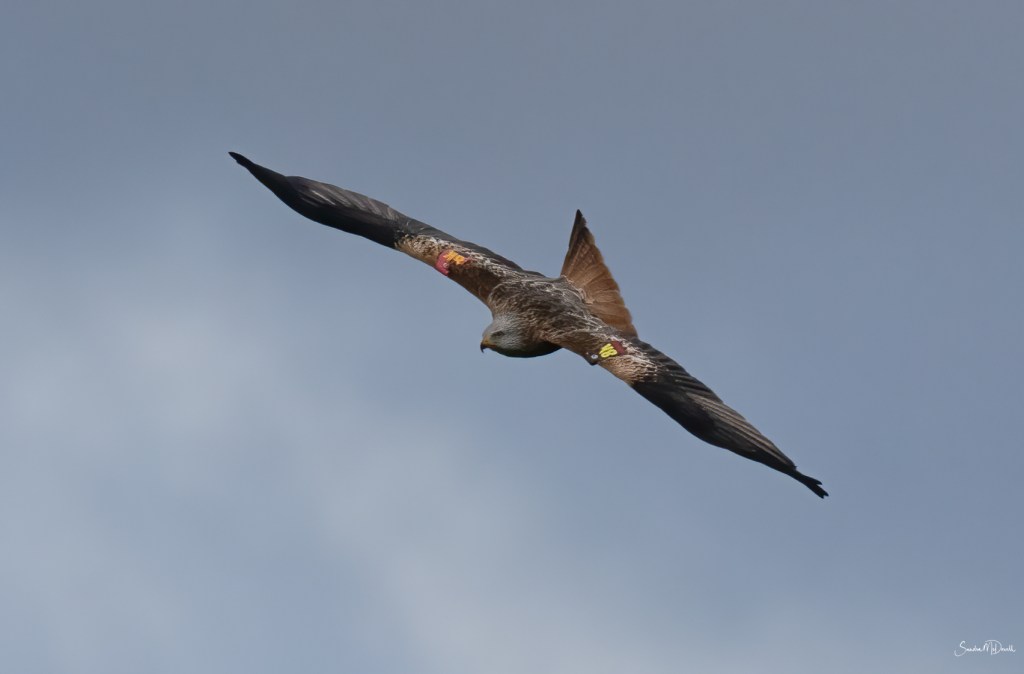
The majority of red kites in Northern Ireland carry wing-tags. As the population is small these tags provide vital information on the survival and movemements of the birds. At this time of year information on whether adult pairs are still together (and are still alive) is critical to understanding the status of the population. If you see a wing-tagged red kite, or better still if you get a photograph of one, please do let us know at nirsg.com/sightings.
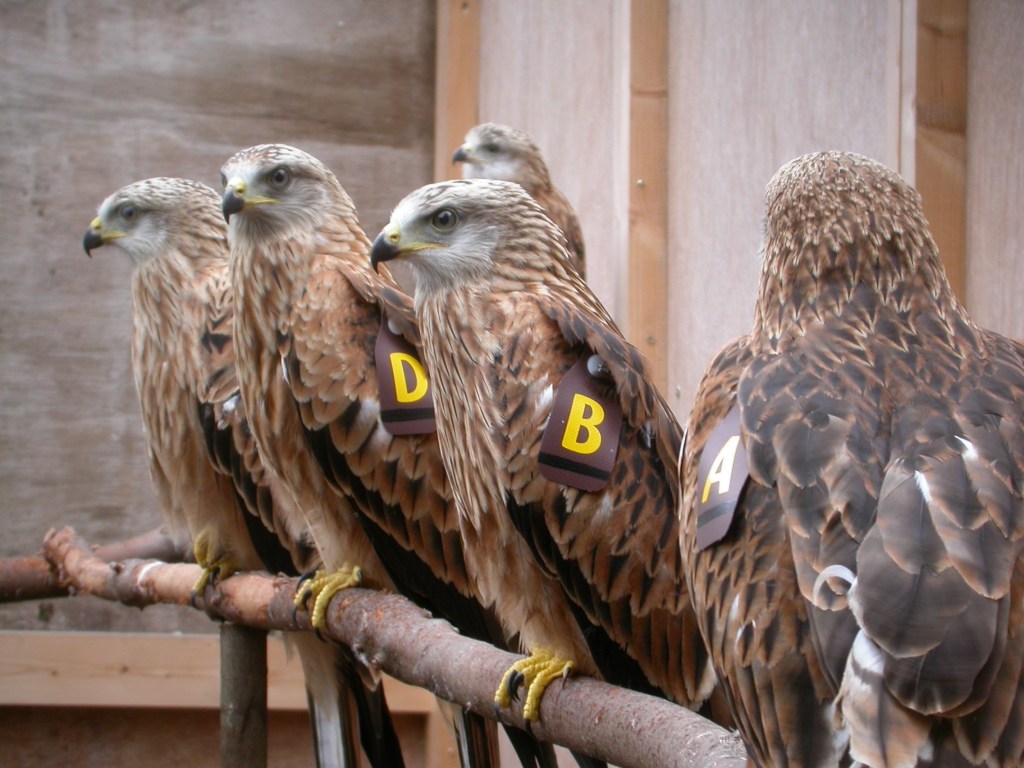
The colour and coding on the wing-tags represent the year and region the bird was born in. In Northern Ireland all the red kite wing-tags are brown on the left wing. The colour on the right denotes the year the bird was born.
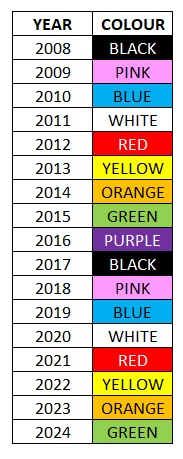
From wing-tagging reports we know that some of the original cohort of Welsh-released birds (born in 2008) are still alive and going well in Northern Ireland. Two of these, Black P (“Paprika”) and Black D (“Dobbin”) have been a breeding pair since 2010 and have produced at least 18 chicks up until 2023.
Another 2008-born bird, ‘Black N’, bred with ‘Pink u’ from 2011 to 2015 and raised 11 chicks. Something then happened to Pink u and Black N stayed in the same territory but took up breeding with her son ‘Yellow 2C’. She raised a further 13 chicks with him before she was found dead in summer 2023. Yellow 2C was at the nest site with a new female (pink 6W). In 12 years Black N had successfully reared 24 chicks.
Marking birds is not an easy task. First, many years of training are required to become licensed – but that is not the hard part. Second, you have to make sure you have the correct equipment every year (rings, washers, wire, paint and tag material in the correct colour!), and renew your licences, but that is also not the hard part. Third, you have reports to write about all the birds that you tag, any welfare concerns etc. and these need sent to the appropriate licencing bodies by certain deadlines. But even that isn’t the hard part….The really hard part is the part carried out by volunteers and members of the public. The hard part is finding the birds to mark, spending hours carrying out surveillance to try and determine where birds might be nesting, learning the skills to interpret what you see and hear so you can locate nest sites. The hard part is looking for the birds once they have been marked, standing in the cold behind a telescope in near darkness watching a red kite roost, zooming in on your photographs, and ultimately communicating what you have seen. That is the hard part – and without volunteers looking for birds, and members of the public reporting sightings, these projects would not be worthwhile. So thank you!
And please, if you see a marked bird, report it. If you aren’t sure who to report to, report it to NIRSG (www.nirsg.com/sightings) and we will find the correct person/ organisation to send it on to. And remember to send in your sightings of any breeding behaviour!
 Hawk-Eyes