
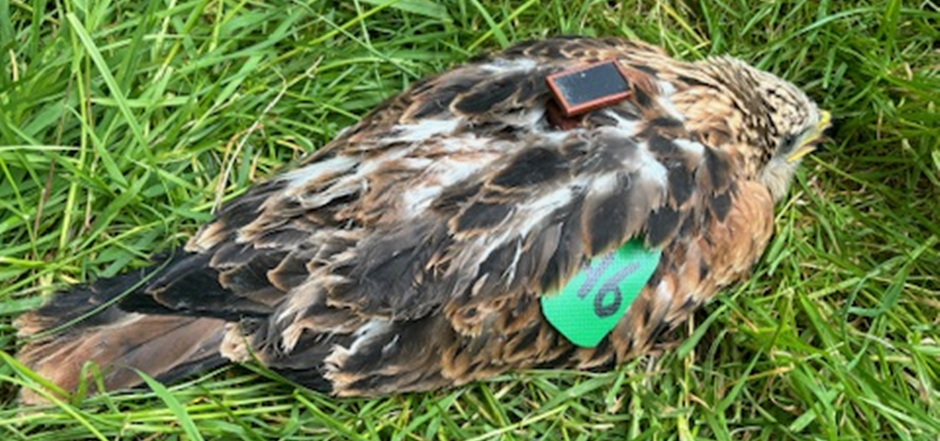
The use of GPS satellite trackers allows us to follow and document the movement behaviour and ecology of animals to an unprecedented extent and level of detail. The Hawk-Eyes Project involves the satellite tagging of free-flying juvenile and adult red kites Milvus milvus and common buzzards Buteo buteo. This initiative represents a critical opportunity to advance our collective understanding of raptor ecology, address conservation challenges, and enhance public engagement in wildlife protection.
Hawk-Eyes enables researchers to identify key breeding, roosting, and foraging sites, monitor survival rates, and assess threats more effectively than fieldwork alone. The insights gained will directly inform conservation strategies and policy recommendations for raptor protection across Ireland. The project also allows for the surveillance and causes of mortality such as ingestion of harmful chemicals as tracked raptors can be located and be sent for testing when they die, adding to the knowledge on pesticide and rodenticide poisoning.
Hawk-Eyes plays a vital role in heritage preservation and public engagement. By making tracking data available through digital platforms, public events, and educational outreach, the project aims to foster greater awareness and appreciation of these iconic species. Hawk-Eyes also uses information collected to engage with the public through telling the tales of the life cycle of these birds. This helps to connect people with their natural environment, help to understand it and take action to have a positive effect on it, increasing involvement in the protection of nature, landscape character and earth science.
 Hawk-Eyes